Open Water Swimming Near You: Lakes, Lidos and First Swims
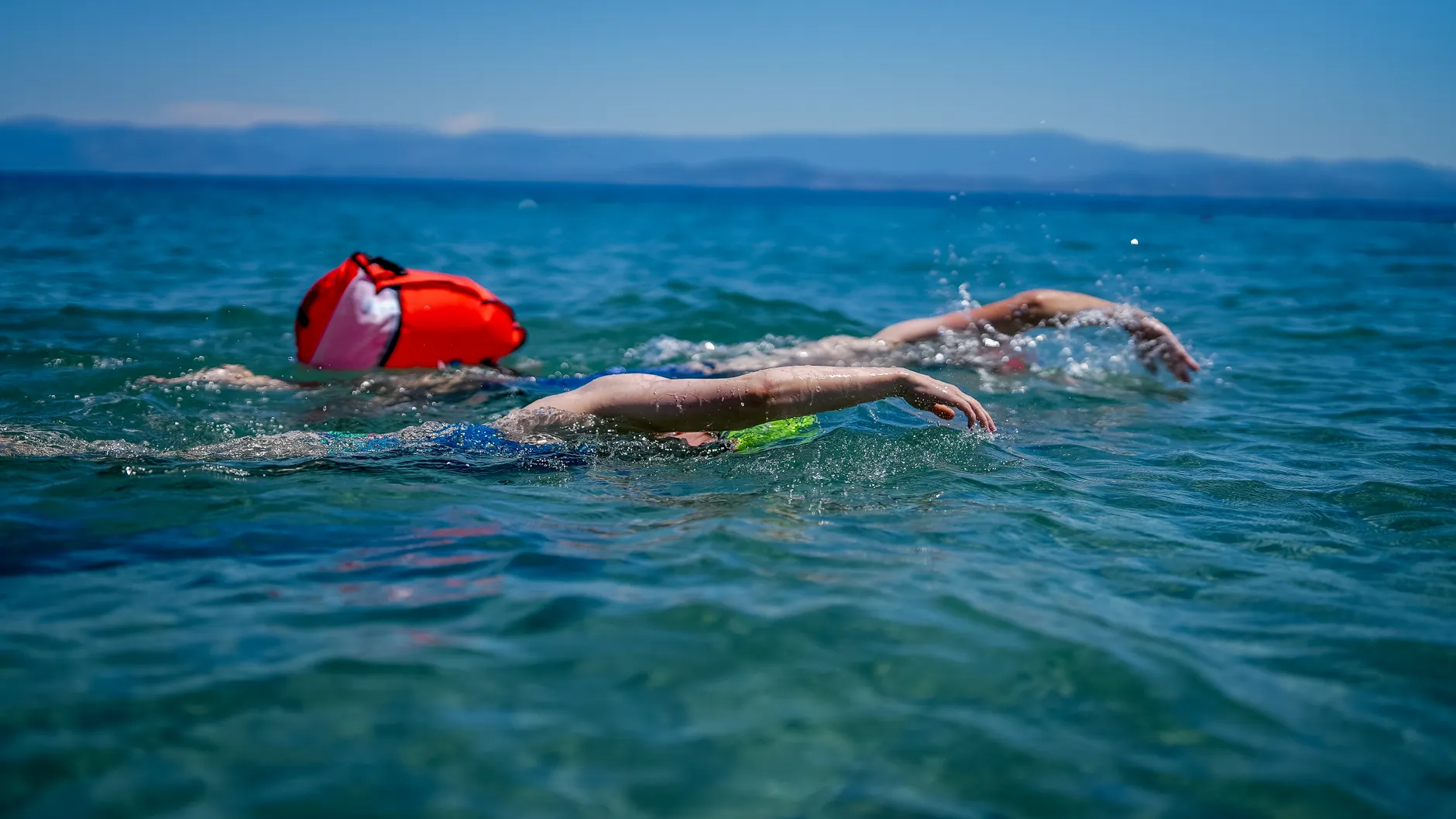
Start with a supervised venue that explicitly permits swimming. Managed lakes and lidos may be seasonal, require advance booking or restrict swimming to particular sessions. Check admission and parking charges separately. Public access to a park, shoreline or footpath does not automatically give permission to enter the water.
The most useful nearby swimming place is not necessarily the closest lake. For a first outing, prioritise lifeguard cover, a defined swimming area, an easy entry and exit, and clear opening rules. This is a venue-finding guide, not a live opening or water-quality report.
What to look for before choosing a nearby swim
- Permission: the operator, landowner or responsible authority allows swimming at that exact location.
- Availability: swimming is open for your intended date and session, with any required booking completed.
- Supervision: lifeguards or rescue staff cover the session you are attending — not simply another part of the site.
- Water-quality advice: the latest applicable official result and any current advisory or closure have been checked.
- A manageable route: there is a short permitted swim with an exit you can use without climbing a steep bank or scrambling over rocks.
A map pin helps locate water. It does not establish swimming permission, lifeguard cover or water quality.
Lakes, lidos and wild spots: which suits a beginner?
| Venue type | What it offers | What to check |
|---|---|---|
| Lifeguarded lake session | Natural water with a defined course, organised entry and rescue cover. | Session booking, shortest route, equipment rules, water temperature and weather closures. |
| Managed lido or outdoor pool | Defined edges, predictable exits and no boat traffic. Useful for getting comfortable swimming outdoors. | Whether it is heated, seasonal opening, admission rules and lifeguard hours. |
| Designated bathing beach | A recognised swimming area, often with an easier shore entry and official monitoring. | Lifeguard dates and hours, advisory flags, water-quality notices, waves, currents and tides where relevant. |
| Organised club swim | Route knowledge, buddying and sometimes coaching or escorted introductions. | Whether beginners are accepted, who provides rescue cover, membership requirements and session fees. |
| Unsupervised wild lake or river | A natural setting without the controls of a managed swimming session. | Separate land-access and swimming permissions, exits, monitoring, currents, boats and emergency access. |
A lido is not necessarily open water. Tinside Lido in Plymouth, England, is a managed 55 m saltwater outdoor pool with seasonal admission. Hathersage Swimming Pool in Derbyshire is a heated outdoor pool. Both illustrate outdoor swimming with controlled access, rather than an uncontained lake or river swim; neither example supplies today’s opening status.
For a beginner who specifically wants natural water, a lifeguarded introductory lake session is the more direct choice. For someone who wants to practise swimming outside before adding navigation, uneven depth or difficult exits, a managed outdoor pool is a useful intermediate step.
How to find a legal swimming venue near you
- Search around a town or postcode, not just a lake name. Combine your location with terms such as lifeguarded lake swimming, beginner open-water sessions or outdoor pool. In the United States, also look for designated swimming beaches in municipal and state parks.
- Match the exact venue and entrance. Check the address and permitted swimming area on the operator, council, park authority or landowner information. Different shores of the same lake can have different owners and rules.
- Check land access and swimming permission separately. A public footpath may reach a reservoir where swimming is prohibited. A publicly accessible park may allow swimming only at one designated beach.
- Find the session that applies to you. Check beginner suitability, minimum age, swimming ability requirements, booking, equipment and whether a safety briefing is compulsory.
- Check the full journey and price. Include admission, booking fees, equipment hire and parking. Identify the correct car park or public-transport stop, the walking approach and any access barriers.
- Save the information needed for a same-day recheck. Keep the operator’s contact details, closure notice, booking confirmation and official water-quality advisory. Record the date you checked each one.
Do not treat an annual opening announcement as proof that swimming is available today. Thunderstorms, water-quality incidents, staff shortages and water-temperature rules can cancel an otherwise scheduled session.
Understand the status before travelling
- Open: swimming is available within the stated area and operating rules. It does not mean unrestricted access at any hour.
- Seasonal: swimming operates during a defined part of the year. Check the actual opening dates and daily timetable.
- Book ahead: reserve the swimming session before travelling. Admission to the surrounding park is not a swim booking.
- Closed: do not enter the water, even if the path, beach or car park remains accessible.
- Swimming banned: the water is not a swimming alternative. Choose another venue rather than looking for an unmarked entry.
For winter sessions, check the rules again rather than carrying over a summer booking arrangement. Some venues change their hours, membership requirements, equipment rules or supervision outside the main season.
Check official water quality — not how clear the water looks
Clear water can contain pathogens, and a popular swimming spot may have no official monitoring. Keep four details together when reading a result: the waterbody, sampling point, result or classification, and sample or publication date. Then check for a newer advisory or closure.
- England: the Environment Agency monitors designated bathing waters during the bathing season. Classifications are Excellent, Good, Sufficient or Poor. A classification reflects sampled conditions over an assessment period; it is not a real-time guarantee for your swim. Check current pollution-risk advice and temporary notices too.
- United States: the EPA Beach Monitoring and Notification Program supports state, tribal and local monitoring at coastal and Great Lakes beaches. Local agencies issue advisories and closures. It does not cover every inland lake, river or swimming hole.
- Park-managed waters: check the responsible park authority’s current notices. A closure for harmful algal blooms, sewage, flooding or another hazard takes precedence over an older acceptable result.
Where no applicable official monitoring exists, the description should be “no official testing”, not “clean” or “safe”. If you simply cannot find a result, do not assume that testing either exists or does not exist; check with the responsible authority.
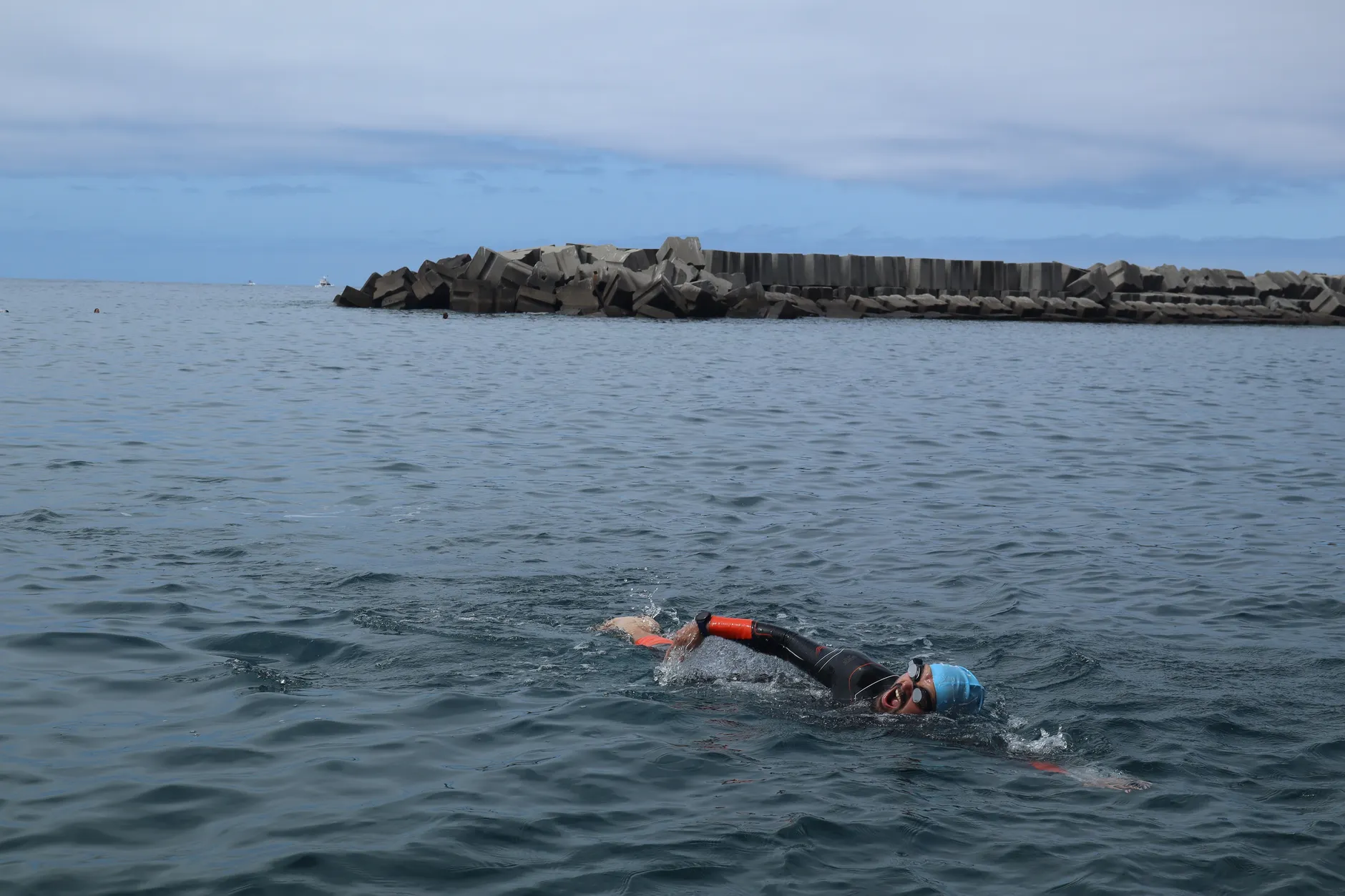
Heavy rain can carry sewage, animal waste and other pollutants into swimming water. There is no single waiting period that makes every site suitable again. Follow the location’s official advice. Stay out where there is a harmful-algal-bloom warning, surface scum, unusual discolouration, a strong odour or dead fish, and report the condition to the operator or authority.
Plan a first swim around the exit, not the distance
Pool fitness does not remove the effects of cold, chop, glare or unfamiliar exits. A first open-water outing should be a short, supervised introduction — not a test of whether you can finish the full lake circuit.
- Book an introductory session and go with a buddy. Tell staff that it is your first open-water swim. Establish the permitted route, exit points and how to signal for help. A group session does not automatically include individual coaching or lifeguard cover.
- Check the entry and exit before changing. Look at the steps, ladder, beach or bank you will actually use. Choose a short marked route or a permitted near-shore swim rather than a crossing.
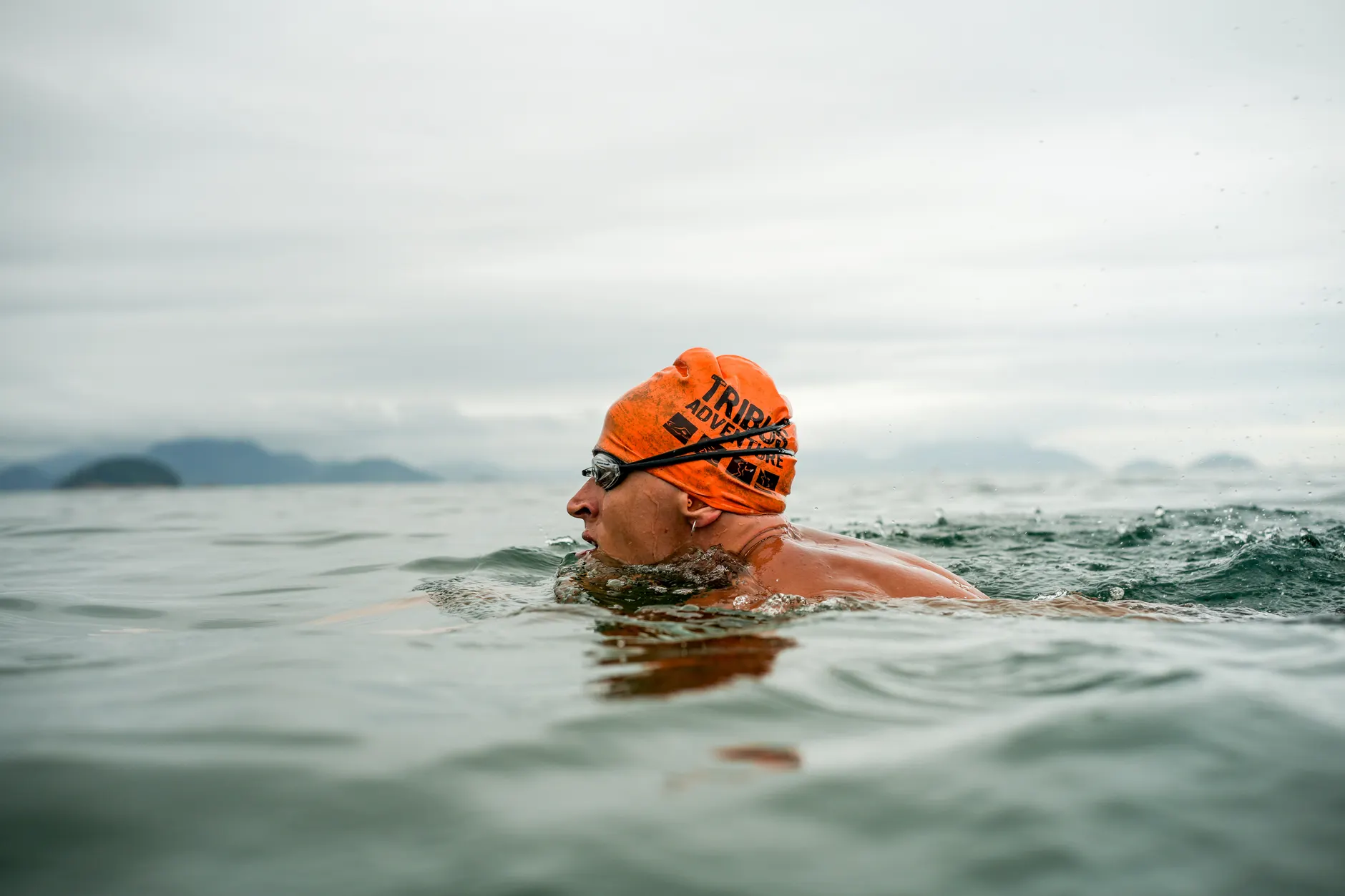
- Bring the venue’s required equipment and dry clothing. A bright cap improves visibility. Use a tow float where required or appropriate, but do not treat it as a lifejacket or a replacement for rescue cover. Check wetsuit requirements before booking.
- Enter gradually and stay close to the exit while breathing settles. Do not jump or dive into unfamiliar water. If you cannot control your breathing, feel distressed or cannot swim comfortably, return to the exit and alert staff.
- Finish before fatigue or cold makes the exit difficult. Dry off, remove wet clothing and put on warm layers promptly. Continue watching for deterioration after leaving the water.
There is no universal first-swim duration that suits every temperature, swimmer and set of conditions. Keep the plan short and flexible, and follow the supervising team’s advice rather than a distance or time target.
If an unexpected cold-water entry leaves you gasping, use the float-to-live response: float on your back, keep your airway clear, allow breathing to settle and call for help. Cold-water shock can affect strong swimmers too.
When to change the plan
- The supervised session is full: book another session or use a managed outdoor pool. Do not move to an unstaffed shore of the same lake.
- The park is open but the swimming area is closed: keep the visit on land. General park access does not override a swimming closure.
- You cannot establish permission or find a usable exit: remove the location from your swimming shortlist until those details are resolved.
- Conditions are worse than expected: cancel or shorten the swim. Thunder, lightning, flooding, rapidly rising water and official pollution warnings are reasons to stay out or leave immediately.
- The only nearby water is a canal, operational reservoir or water beside a weir: do not substitute proximity for suitability. Canals and reservoirs often have restrictions, while weirs, sluices, intakes and low-head dams create serious hazards.
Do not swim after drinking alcohol or taking impairing drugs. Children and weak swimmers need close supervision; an adult watching from the bank is not equivalent to a lifeguard positioned and equipped for rescue.
Your first-swim shortlist
Choose the nearby venue with explicit swimming permission, a suitable supervised session, current official advice and an easy exit. Keep its booking details, total cost, emergency contact and last-checked date together so you can recheck quickly before leaving.
Outdoor swimming is at your own risk, including at managed venues. Report changed access or damaged facilities to the operator, and always check permissions, closures, weather and water conditions immediately before swimming.